My opponent, Dan Jaworski, has been on the DCTA Board of Directors for nearly 3 years. His task is to increase ridership. To increase ridership, you need people, for that many people, you need high density housing. Just look at downtown Lewisville.
DCTA’s financial survival depends on ridership. More riders = more fare revenue + stronger case for federal/state grants. Fewer riders = budget pressure and harder to justify the system’s existence. This creates a structural incentive for DCTA to want more people living close to their stations.
The Transit Agency Business Model
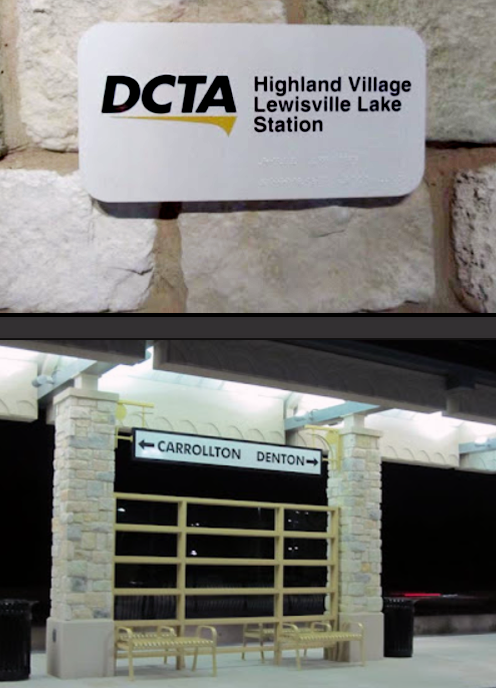
Photo by Susan B. May 31, 2011. From Bucks Tracks
Why Density = Ridership
Transit works best when people can walk to a station. A single-family neighborhood with 4 homes per acre generates maybe 10-20 potential daily riders near a station. A mid-rise apartment complex with 200 units on that same land generates hundreds of potential daily riders. Transit agencies universally understand this math — density is the fuel that makes transit financially viable.
How DCTA Acts on This
DCTA doesn’t just operate buses and trains — it actively:
Commissions transit-oriented development (TOD) plans around its A-train stations
Uses its TRiP grant program to fund infrastructure improvements that make areas more walkable and development-friendly
Partners with cities on master plans that explicitly call for apartments, mixed-use housing, and higher-density residential near station
The Lewisville Old Town area is the clearest example — DCTA owns land adjacent to the Old Town Station, and the city approved a 600-unit apartment development right there as part of DCTA’s broader TOD vision.
The Highland Village Problem
DCTA has openly acknowledged that Highland Village is a “low-density area with unique mobility needs.”
That’s a diplomatic way of saying: the city’s single-family character makes transit inefficient and expensive to serve. For Highland Village to get meaningful value out of DCTA membership, density near the A-train station would need to increase — which means apartments.
The Political Tension
This is where it gets real. DCTA’s institutional interests point toward apartments and density. Highland Village’s identity and many residents’ preferences point toward remaining a low-density, single-family community. As long as Highland Village stays low-density, it will continue paying ~$2M/year for transit service that relatively few residents use — because the city’s character is fundamentally misaligned with what transit needs to thrive.
Dan Jaworski’s task is to re-align HVs character and increase ridership, requiring more people and even denser housing. Dan’s loyalties lie with DCTA, not HV. He proves this everyday as a DCTA Board Member by not finding opportunities for DCTA to provide value to HV for the ~$2M HV allocates to DCTA every year.
That’s the honest case: membership in DCTA creates soft pressure toward density over time, even if no one is forcing a rezoning vote today.